Browser-based multimedia hub for quick playback, editing, and conversion
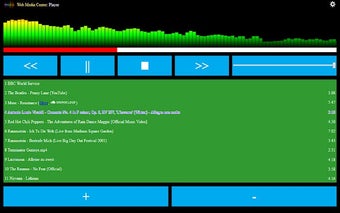
Web Media Center, from Web Media Center, is a Chrome extension that centralizes browser-hosted multimedia tasks. It packs playback, recording, editing, conversion, and speech tools into a single extension for in-browser workflows. The suite pairs utilities such as a player, a recorder, speech-to-text, and a browser port of FFmpeg for format changes. It targets users who need lightweight, browser-centered media handling for quick projects and on-the-go edits.

Unlock your creativity with Adobe Stock
Get 10 images or 1 video with a free trial
What is the app meant to handle inside a browser?
The app addresses the capture-to-delivery gap that often forces file shuttling between desktop programs. By running inside Chrome, it provides a single access point for playing remote streams and working with local files without installing separate programs. This reduces task switching for short-form multimedia workflows and supports creators who need rapid turnaround for web publishing or classroom demonstrations.
What media formats and streaming sources does it handle?
Format compatibility is explicit: the player accepts common audio and video types and playlist files, and conversion runs through an integrated FFmpeg port. Typical supported items include:
- Audio: MP3, WAV
- Video: H.264/AVC (MPEG-4 Part 10)
- Playlists: M3U, PLS
The app also plays remote content from major platforms, enabling direct work with YouTube, Vimeo, and SoundCloud streams.
Is the tool better for beginners or professionals?
The tool targets creators who prefer a lightweight, browser-first approach rather than full studio environments. Onboarding is accessible through features like a sound recorder and speech-to-text for rapid capture, while the multi-track editor and waveform preview offer more control for intermediate users. Although feature-rich for the browser, experienced audio/video professionals who require deep desktop integration may find the environment limiting for complex pipelines. Users should respect content provenance when converting or republishing streamed material.
How reliable are exports and how does performance behave?
Export and conversion tasks use a browser-side FFmpeg implementation, so the app can perform format transfers and basic media manipulation without leaving the browser. User reception highlights the utility of in-browser processing for many common tasks, noting a specialized niche for this approach. Performance and responsiveness depend on running inside the Chrome extension model, which suits short projects and rapid edits more than prolonged, resource-heavy sessions.
Suitable choice for browser-first creators, with scaling trade-offs
The app is a practical option for creators who prioritize working entirely inside a browser and need fast, web-oriented results. Its main trade-off is that browser-hosted workflows are less suited to large-scale, studio-grade productions that demand deep desktop integration. Recommended for quick edits, teaching, podcasting drafts, and web publishing tasks where convenience and speed matter more than heavyweight project scaling.